

The Kilimanjaro summit trek represents one of the world’s most iconic and accessible high-altitude adventures, drawing thousands of trekkers annually to pursue the dream of standing atop Africa’s highest point. At 5,895 meters (19,341 feet), Uhuru Peak crowns this magnificent dormant volcano, offering an achievement that requires no technical climbing skills yet demands respect for altitude, thorough preparation, and unwavering determination. Understanding what the summit trek entails—from the multi-day approach through diverse ecological zones to the challenging final push in darkness and freezing temperatures—prepares trekkers mentally and physically for this transformative journey. This comprehensive guide explores every aspect of the Mountain Climbing Kilimanjaro equipping you with knowledge to maximize your chances of success.
The Journey to Uhuru Peak
The Mountain CLimbing Kilimanjaro unfolds over five to nine days depending on your chosen route, with each day bringing new landscapes, challenges, and elevations. Unlike traditional mountaineering expeditions requiring technical skills, ropes, or ice axes, Kilimanjaro summit treks follow established trails accessible to fit hikers. However, the rapid altitude gain from trailheads around 1,800 meters to the 5,895-meter summit creates the trek’s primary challenge.
Your summit trek begins in the lush cultivation zones surrounding the mountain’s base, where villages and farms give way to montane forests. These initial hours immerse trekkers in humid, tropical environments rich with colobus monkeys, vibrant bird species, and unique flora. The forest zone extends to approximately 3,000 meters, where vegetation transitions to heath and moorland characterized by otherworldly giant groundsels and lobelias—plants found nowhere else on Earth.
Above 4,000 meters, the alpine desert zone presents stark, barren landscapes where volcanic rock and scree dominate. Temperatures fluctuate dramatically between scorching daytime sun and freezing nights. Vegetation virtually disappears, leaving trekkers traversing moonscape-like terrain. Finally, the arctic summit zone above 5,000 meters features glaciers, permanent ice fields, and conditions so harsh that nothing grows. This remarkable ecological journey—experiencing five climate zones equivalent to traveling from equator to Arctic—makes Mountain CLimbing Kilimanjaro uniquely compelling.
Preparing for Summit Night
Summit night represents the trek’s emotional and physical climax, typically beginning around midnight. After only a few hours of fitful sleep at high camps situated between 4,600 and 4,900 meters, trekkers wake in darkness, layer every piece of warm clothing, and begin the final ascent. This timing serves multiple purposes: reaching the summit at sunrise for spectacular views and photographic opportunities, traversing scree fields while frozen and more stable, and completing the ascent before afternoon weather deterioration.
The summit push typically takes six to eight hours of continuous upward movement through bitter cold, darkness, and thin air containing only half the oxygen available at sea level. Headlamps illuminate the seemingly endless switchbacks as lines of trekkers snake upward, each focused on maintaining the slow, deliberate “pole pole” pace that prevents exhaustion and manages altitude effects. Temperatures commonly drop to -20°C to -10°C (-4°F to 14°F), with wind chill making conditions even more severe.
Mental preparation for summit night proves as crucial as physical readiness. The combination of sleep deprivation, extreme cold, altitude effects, physical exhaustion, and darkness creates significant psychological challenges. Many trekkers experience moments of doubt, questioning their ability to continue. Understanding this challenge beforehand, developing mental strategies, and committing to perseverance dramatically improve completion rates. Your guides constantly monitor your condition, encouraging progress while watching for dangerous altitude sickness symptoms requiring immediate descent.
The Summit Experience
After hours of grinding upward through darkness, trekkers first reach either Stella Point (5,756 meters) on the crater rim if approaching via the Western Breach or Barafu routes, or Gilman’s Point (5,681 meters) if ascending from Kibo Hut. Reaching these points marks tremendous achievement, though the true summit—Uhuru Peak—lies another 45 to 90 minutes along the crater rim. This final section traverses relatively level but extremely high terrain where altitude effects intensify.
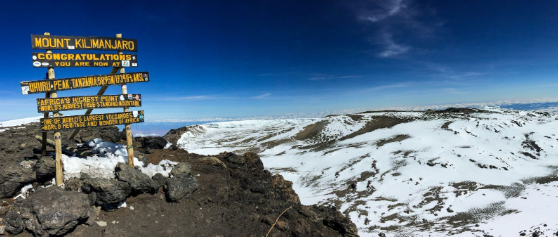
Arriving at Uhuru Peak, marked by the iconic wooden sign and glacier backdrop, triggers overwhelming emotions. Exhaustion, euphoria, relief, pride, and sometimes tears merge as trekkers realize they’ve achieved something genuinely extraordinary. The summit experience varies by weather and season—clear conditions reveal spectacular panoramas encompassing vast Tanzanian plains, distant Mount Meru, and Kilimanjaro’s crater containing remnant glaciers and the ash pit. Cloud-covered summits, while disappointing for views, create ethereal atmospheres as trekkers stand above cloud seas stretching to horizons.
Summit time remains limited regardless of conditions. The extreme altitude makes extended stays dangerous, and guides typically allow only 10 to 20 minutes for photographs and celebration before beginning descent. The combination of accomplishment and altitude creates strange emotional states—simultaneously the happiest moment of your life and desperate eagerness to descend to thicker air. This brief summit experience, however, provides memories lasting lifetimes.
The Descent
What ascends must descend, and the return journey from Uhuru Peak presents its own challenges. The initial descent from summit to high camp typically takes two to four hours, retracing the summit night route. Descending steep scree fields proves physically demanding on knees and legs, though returning to lower elevations brings welcome relief as oxygen levels increase and altitude symptoms dissipate.
Most summit treks continue descending past high camp to lower elevations on summit day, creating 12 to 16-hour days from midnight start through afternoon finish. This extended descent, undertaken while exhausted from summit efforts, requires concentration and care. The majority of mountain accidents occur during descents when fatigue impairs judgment and coordination. Trekking poles prove invaluable during these long descents, reducing joint stress and improving stability.
The trek concludes with final descent days returning through the ecological zones you ascended, typically reaching trailheads two to three days after summiting. These descent days, while physically easier, still demand attention as fatigue accumulates and mental focus wanes with achievement accomplished. Completing the descent safely represents the final crucial component of successful summit treks.
Routes to the Summit
Seven established routes lead to Kilimanjaro’s summit, each offering distinct trekking experiences. The Marangu Route provides the most straightforward approach with hut accommodation, though its popularity and shorter duration (five to six days) result in lower success rates around 60 percent. The Machame Route, the most popular among experienced trekkers, succeeds at approximately 80 percent on seven-day itineraries thanks to superior acclimatization profiles.
The Lemosho and Northern Circuit routes offer the longest approaches, allowing optimal altitude adaptation while traversing the mountain’s spectacular western and northern flanks. Eight and nine-day itineraries achieve success rates exceeding 90 percent while providing more wilderness experiences away from crowded routes. The Rongai Route approaches from the drier north, offering gentler gradients and different ecological perspectives. The Umbwe Route presents the steepest, most challenging approach recommended only for very fit trekkers with altitude experience.
Regardless of route, all converge at the summit zone, with most trekkers launching final ascents from either Barafu Camp (Machame, Lemosho routes) or Kibo Hut (Marangu, Rongai routes). Route selection should balance your fitness level, available time, budget, and desired wilderness experience, with longer routes consistently delivering higher summit success through better acclimatization.
Physical Demands and Fitness Requirements
The Kilimanjaro summit trek demands excellent cardiovascular fitness and leg strength. While technical climbing skills aren’t required, trekking four to eight hours daily for consecutive days while carrying a daypack at increasing altitudes requires substantial physical capability. Summit day typically involves 12 to 16 hours of continuous trekking with over 1,200 meters of elevation gain followed by more than 2,000 meters of descent.
Preparation should begin three to four months before your trek, focusing on aerobic conditioning through hiking, running, cycling, or swimming. Training hikes with weighted packs simulate trek demands, gradually increasing to six-hour excursions with significant elevation gain. Stair climbing and hill repeats build specific leg strength for sustained ascents and descents. Core strengthening improves balance and reduces fatigue during long trekking days.
However, physical fitness alone doesn’t guarantee summit success. Altitude affects even supremely fit individuals unpredictably, while less athletic trekkers who acclimatize well often succeed. The combination of solid fitness, appropriate acclimatization, proper nutrition and hydration, mental determination, and listening to your body creates optimal conditions for summit success.
Altitude Acclimatization Strategies
Managing altitude represents the single most critical factor in summit trek success. As elevation increases, atmospheric pressure and oxygen availability decrease. At Kilimanjaro’s summit, oxygen levels drop to approximately 49 percent of sea level amounts. The body requires time to adapt through physiological changes including increased breathing rate, elevated heart rate, and enhanced red blood cell production.
The golden rule of altitude acclimatization is ascending slowly. Routes offering seven to nine days provide bodies adequate adaptation time, dramatically improving success rates compared to shorter five-day treks. The principle of “climb high, sleep low” further enhances acclimatization—hiking to higher elevations during the day before descending to sleep at lower camps allows exposure to altitude while recovering at more oxygen-rich elevations.
Recognizing altitude sickness symptoms proves essential. Mild symptoms include headache, nausea, loss of appetite, fatigue, and sleep difficulty. These common experiences often resolve with rest, hydration, and continued acclimatization. However, severe symptoms including intense headaches unrelieved by medication, extreme fatigue, significant shortness of breath at rest, confusion, or coordination loss require immediate descent. Altitude sickness can rapidly progress to life-threatening conditions if ignored.
Essential Gear for Summit Success
Proper equipment directly impacts summit trek success and comfort. The layering system proves essential for managing temperature extremes from hot forest trekking to freezing summit conditions. Base layers should wick moisture, mid-layers provide insulation, and outer shells protect against wind and precipitation. Summit night requires insulated jackets and pants, warm gloves or mittens, balaclava or warm hat, and possibly hand and foot warmers.
A four-season sleeping bag rated to -15°C (5°F) ensures adequate warmth at high camps where tent temperatures plummet. Quality waterproof hiking boots with ankle support, thoroughly broken in before the trek, prevent blisters and provide stability on varied terrain. Trekking poles dramatically reduce knee stress during descents and improve balance on challenging sections.
High-altitude sun exposure demands comprehensive protection including high-SPF sunscreen, lip balm with SPF, glacier sunglasses or goggles, and sun hats. Hydration systems or insulated water bottles maintain fluid intake, crucial for acclimatization and performance. Headlamps with fresh batteries illuminate summit night’s darkness. Many trekkers benefit from altitude sickness medication prescribed by physicians, though this doesn’t replace proper acclimatization.
The Role of Guides and Support Teams
Professional guides and support teams prove instrumental in summit trek success. Certified guides possess extensive mountain experience, wilderness first aid training, and deep knowledge of altitude sickness recognition and management. They set appropriate pacing, monitor trekker health through pulse oximeter readings and daily checks, make critical decisions about weather and safety, and provide encouragement during challenging moments.
Assistant guides support head guides, improving staff-to-trekker ratios and ensuring adequate attention for each participant. Porters, the backbone of Kilimanjaro operations, carry equipment, food, and supplies while setting up camps before trekkers arrive. Their incredible strength and endurance under challenging conditions deserve immense respect and appropriate compensation through fair wages and tips.
Quality operators maintain proper staff-to-trekker ratios, invest in guide training and safety equipment, and adhere to ethical porter treatment standards established by organizations like the Kilimanjaro Porters Assistance Project. Selecting operators prioritizing guide quality and ethical practices directly improves your summit trek experience and success probability.
Mental Preparation and Mindset
Mental resilience often determines summit success as much as physical fitness. The Kilimanjaro summit trek tests psychological limits through sleep deprivation, physical discomfort, altitude effects, temperature extremes, and extended exertion. Developing mental strategies before the trek proves invaluable when facing inevitable low moments.
Visualization techniques help prepare for challenges ahead. Mentally rehearsing summit night—the cold, darkness, exhaustion, and internal dialogue encouraging perseverance—builds psychological readiness. Breaking the trek into manageable segments rather than fixating on the distant summit helps maintain focus and motivation. Developing mantras or focusing on why you’re undertaking this challenge provides mental anchors during difficult periods.
Accepting discomfort as temporary and normal reduces psychological distress. Understanding that nearly everyone experiences altitude headaches, nausea, fatigue, and moments of doubt normalizes these feelings rather than viewing them as personal failures. The summit trek isn’t about avoiding discomfort but managing it effectively while continuing forward progress.
Conclusion
The Kilimanjaro summit trek represents an extraordinary adventure combining physical challenge, mental determination, and profound personal achievement. While the mountain’s non-technical nature makes the summit theoretically accessible to prepared trekkers, success demands respect for altitude, thorough physical preparation, appropriate route selection allowing adequate acclimatization, quality equipment, and unwavering mental resilience. The multi-day journey through distinct ecological zones, culminating in the challenging summit night push through darkness and extreme cold, tests limits while revealing inner reserves of strength and perseverance.
Standing atop Uhuru Peak delivers transformative experiences extending far beyond the summit itself. The journey encompasses immersion in unique ecosystems, connection with Tanzanian mountain culture, bonds formed with fellow trekkers and dedicated support teams, and discovery of personal capabilities perhaps previously unknown. Whether ultimately reaching the summit or turning back due to altitude or weather, the Kilimanjaro summit trek profoundly impacts those who undertake it, creating memories, lessons, and confidence that resonate throughout life. With proper preparation, realistic expectations, and respect for the mountain’s challenges, this iconic African summit awaits those willing to pursue it.
Frequently Asked Questions
How difficult is the Kilimanjaro summit trek? The summit trek requires no technical climbing skills but demands excellent fitness, mental resilience, and altitude tolerance. Typical trekking days involve 4-8 hours of hiking at increasing elevations, while summit night requires 12-16 hours of continuous effort in extreme conditions. The primary challenge is altitude rather than terrain difficulty. Fit hikers with proper preparation succeed regularly, though approximately 15-40% of trekkers don’t reach the summit, primarily due to altitude sickness rather than physical inability.
What is summit night like on Kilimanjaro? Summit night begins around midnight after brief sleep at high camp (4,600-4,900m). Trekkers dress in all warm layers and begin ascending through darkness in temperatures often reaching -20°C with wind chill. The 6-8 hour climb involves endless switchbacks up steep scree slopes, with only headlamps illuminating the path. Altitude effects intensify as oxygen levels drop to half of sea level. Most trekkers describe it as the most physically and mentally challenging experience of their lives, yet ultimately rewarding when reaching the summit at sunrise.
What are the chances of reaching Uhuru Peak? Success rates vary dramatically by route duration and acclimatization. Five-day routes achieve approximately 50-60% success, six-day routes around 65-75%, seven-day routes 80-85%, while eight and nine-day routes exceed 90%. The extra days allow proper altitude adaptation, the single most important factor in summit success. Most failures result from altitude sickness requiring descent rather than physical inability. Choosing longer routes, maintaining proper hydration, ascending slowly, and listening to guides dramatically improve your probability.
Do I need previous high-altitude experience? No previous high-altitude experience is required for Kilimanjaro summit treks. However, prior experience helps you understand how your body responds to altitude and builds confidence. If you’ve successfully trekked above 4,000 meters elsewhere, you know you can acclimatize adequately. First-time high-altitude trekkers succeed regularly on Kilimanjaro with proper preparation, appropriate route selection, and gradual ascent. Physical fitness and mental determination matter more than previous altitude experience.
How cold does summit night get? Summit night temperatures typically range from -20°C to -10°C (-4°F to 14°F), with wind chill making conditions significantly colder. At high camps before the summit push, nighttime temperatures drop to -10°C to 0°C (14°F to 32°F). Proper cold-weather gear including insulated jacket and pants, warm gloves or mittens, balaclava, and multiple layering options proves essential. Lower elevations remain much warmer—forest zones stay around 20°C (68°F), while moorland camps range from 0-10°C (32-50°F).

, while moorland camps range from 0-10°C (32-50°F).)