

Few natural phenomena rival the sheer spectacle and drama of Tanzania Great Wildebeest Migration. Often called “the greatest show on Earth,” this annual movement involves over 1.5 million wildebeest, accompanied by hundreds of thousands of zebras, gazelles, and other herbivores, traversing the Serengeti-Mara ecosystem in a never-ending quest for fresh grazing and water. This circular journey covers approximately 800 to 1,000 kilometers and represents the largest single movement of terrestrial mammals on the planet—so vast that the columns of animals can be seen from space. For safari enthusiasts, witnessing this extraordinary event offers unparalleled opportunities to observe the raw power of nature, the delicate balance of predator and prey, and the timeless rhythms that have governed East African ecosystems for millennia.
Understanding the Migration Cycle
The Great Wildebeest Migration is not a singular event with a fixed date but rather a continuous, year-round journey dictated entirely by rainfall patterns and the subsequent growth of fresh grass. The animals move in a roughly clockwise pattern through Tanzania’s Serengeti National Park and Kenya’s Maasai Mara National Reserve, following ancient routes guided by instinct and the promise of nutritious grazing. Scientists believe the wildebeest can detect rain and thunderstorms from over 50 kilometers away, though the precise mechanisms remain mysterious.
This perpetual movement creates a fascinating succession of grazing patterns. Zebras lead the way, feeding on the tallest, coarsest grasses and trampling the vegetation. Wildebeest follow, consuming the shorter, fresher shoots that emerge after zebras pass through. Finally, Thomson’s gazelles arrive to nibble the remaining tender grasses and herbs close to the ground. This sequential grazing maintains ecological balance and explains why different species tend to move together yet maintain distinct groupings.
The migration’s timing varies annually based on rainfall, which has become increasingly unpredictable due to climate change. Traditional monthly patterns serve only as guidelines—the migration can arrive weeks early or late depending on when and where rains fall. This unpredictability makes flexible safari planning and expert local guidance essential for maximizing your chances of witnessing key events.
Month-by-Month Migration Guide
January to March: Calving Season in the Southern Serengeti
The migration year begins dramatically in the southern Serengeti plains and Ndutu area, within the Ngorongoro Conservation Area. Triggered by the short rains in November and December, massive herds converge on these nutrient-rich short-grass plains to graze and prepare for calving. February marks the peak of the birthing season, when approximately 500,000 wildebeest calves are born over a concentrated three-week period—roughly 8,000 births daily.
This synchronized calving represents a survival strategy known as “predator swamping.” By flooding the ecosystem with vulnerable newborns simultaneously, wildebeest ensure that predators cannot possibly consume all the calves, allowing sufficient numbers to survive. Witnessing this phenomenon provides extraordinary opportunities to observe newborn wildebeest taking their first wobbly steps within minutes of birth and to see predators—lions, cheetahs, leopards, and hyenas—capitalizing on this annual feast.
The southern plains during calving season offer exceptional photographic opportunities. The landscape becomes lush and green from recent rains, creating beautiful backdrops for wildlife imagery. The abundance of vulnerable prey attracts large concentrations of predators, resulting in dramatic hunting scenes and intense predator-prey interactions that represent some of safari’s most compelling moments.
April to May: The Beginning of the Great Trek
As the long rains intensify from March through May, the herds begin their momentous journey northward. They move from the Ndutu area past Simba Kopjes toward Moru Kopjes, then gradually disperse across the central Serengeti and Western Corridor. During this transition period, the calves grow stronger while mating season begins, creating additional drama as male wildebeest engage in head-to-head battles for breeding rights.
April and May present challenges for safari-goers as heavy rains make some roads impassable and wildlife becomes more dispersed. However, these months also offer advantages: fewer tourists, dramatically lower prices, and spectacular scenery with vibrant green landscapes and flowing watercourses. The herds, though spread across wider areas, still provide excellent viewing for those willing to embrace the wet season.
June to July: Western Corridor and Grumeti River Crossings
By June, the migration reaches the Western Corridor of Serengeti National Park, where the Grumeti River presents the first major obstacle. Though not as continuously flowing as the Mara River, the Grumeti features pools and channels inhabited by enormous crocodiles—some measuring over five meters—that have been waiting months for this annual feast.
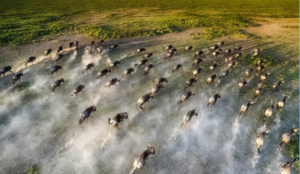
The Grumeti crossings, typically occurring from late May through July, provide dramatic wildlife spectacle though generally on a smaller scale than the famous Mara River crossings. The herds often congregate on the southern bank for days or even weeks, building courage before attempting the perilous crossing. Photographers prize these crossings for capturing images of wildebeest plunging into crocodile-infested waters, the powerful reptiles lunging from below, and the chaos of thousands of animals desperate to reach the opposite bank.
August to October: Northern Serengeti and Mara River Drama
The period from late July through October represents the migration’s most famous phase, when herds spread across the northern Serengeti and face the Mara River’s treacherous crossings. This river, which flows year-round from Kenya’s Maasai Mara into Tanzania’s Serengeti, creates the migration’s most formidable barrier and delivers its most iconic imagery.
Mara River crossings occur throughout this period, often multiple times daily at various crossing points. The herds exhibit seemingly inexplicable behavior, sometimes crossing back and forth without apparent reason. This confusion creates spectacular scenes of mass panic as hundreds of thousands of wildebeest crowd riverbanks, surge into rushing water, scramble up steep opposite banks, and face attacks from massive Nile crocodiles lurking in the depths.
What makes the Mara River crossings extraordinary is their unpredictability and intensity. Wildebeest may gather at crossing points for hours or days before suddenly rushing into the water in massive waves. Some animals drown in the crush, others break legs on rocky banks, and many fall prey to crocodiles—yet the sheer numbers ensure most survive. For safari-goers, witnessing a major crossing ranks among Africa’s most thrilling wildlife experiences.
Importantly, despite common misconceptions, the majority of Mara River crossings occur on the Tanzanian side of the border, particularly between the Kogatende area and the Lamai Wedge. Recent years have even seen approximately two-thirds of the migration remain in northern Serengeti rather than entering Kenya, as sufficient fresh grass negates the need to cross into the Maasai Mara.
November to December: The Return South
October and November mark the beginning of the return journey as short rains begin in the southern Serengeti. The herds move southward through the Lobo area and eastern Serengeti, traveling in smaller, more dispersed groups compared to the dense concentrations seen during northward migration. This southward movement proceeds at a more leisurely pace, with animals focused on grazing rather than urgent movement.
By late November and December, the herds arrive back in the southern plains and Ndutu area, settling down to graze on fresh grass sprouting from the short rains. Pregnant females, their bellies swollen with developing calves, prepare for the upcoming February birthing season. This arrival completes the annual circuit and reestablishes the connection between life and landscape that has sustained these animals for countless generations.
The November-December period offers excellent safari opportunities with fewer tourists, beautiful green scenery following rains, and abundant wildlife spread across accessible southern plains. The cycle begins anew, perpetuating the eternal rhythm of migration that defines the Serengeti ecosystem.
Planning Your Migration Safari
Best Time to Visit
The “best” time depends entirely on what you want to witness and your tolerance for crowds and costs:
For River Crossings (Most Popular): Late July through September offers the highest probability of witnessing dramatic Mara River crossings in northern Serengeti. However, this period also brings peak tourist numbers and maximum prices.
For Calving Season: January through March provides exceptional opportunities to witness mass birthing, see newborn calves, and observe intense predator activity on the southern plains. February specifically represents the peak of calving season.
For Value and Solitude: April through early June (the “green season”) offers significantly lower prices, fewer tourists, and beautiful lush landscapes, though some roads become challenging and animals are more dispersed.
For Overall Wildlife Viewing: June through October combines excellent general wildlife viewing with migration presence and dry weather, making it the most popular (and expensive) period.
Where to Stay
Accommodation choice significantly impacts both your experience and budget. Options range across a broad spectrum:
Mobile/Seasonal Camps: These camps follow the migration, relocating two to four times annually to maintain proximity to the herds. Premium mobile camps like Nomad Tanzania’s Serengeti Safari Camp and &Beyond’s Serengeti Under Canvas offer the ultimate migration experience by positioning directly where the action occurs. Other excellent mobile operations include Alex Walker’s Serian, Asilia’s Olakira, Ubuntu, and Kimondo camps. Expect to pay $600-$1,500+ per person per night.
Permanent Lodges and Camps: Strategically located permanent accommodations in different Serengeti zones allow you to target specific migration phases. For calving season, choose southern Serengeti/Ndutu properties. For Grumeti crossings, stay in the Western Corridor. For Mara River drama, select northern Serengeti lodges near Kogatende. These range from $150-$800+ per person per night depending on luxury level.
Budget Camping: Public and private campsites throughout Serengeti offer basic facilities for budget-conscious travelers, with costs from $50-$150 per night including camping fees and basic meals.
Safari Costs and Budgeting
Understanding the complete cost structure helps plan effectively:
Park Fees: Serengeti National Park charges $70 per adult per day (plus 18% VAT = $82.60 total). For those staying in lodges/camps inside the park, an additional concession fee of $60 per adult per day applies (also subject to 18% VAT).
Safari Package Costs:
- Budget Safaris: $200-$350 per person per day (shared vehicles, basic camping, simple meals)
- Mid-Range Safaris: $400-$650 per person per day (comfortable tented camps, private vehicles, excellent guides)
- Luxury Safaris: $800-$2,000+ per person per day (exclusive camps, gourmet dining, premium vehicles, personalized service)
Transportation: Road transfers from Arusha take 6-7 hours and cost $250-$400. Domestic flights from Arusha to Serengeti airstrips cost $200-$350 per person one-way, saving significant time.
Additional Activities: Hot air balloon safaris ($550-$600 per person) provide unforgettable aerial perspectives. Maasai village visits ($30-$50), guided walks, night drives (outside park boundaries), and bush meals add cultural and adventure elements at extra cost.
Budget-Saving Strategies: Travel during shoulder seasons (late March-May, November), join group safaris to share vehicle costs, book directly with Tanzanian operators rather than international agencies, focus on classic game drives rather than premium add-ons, and consider staying outside park boundaries to avoid concession fees.
Booking Timeline and Logistics
Migration safaris, particularly during peak season (July-October), require advance planning. Many premium lodges and mobile camps fill up 12-18 months ahead. Mid-range options should be booked 6-9 months in advance, while budget options offer more flexibility though still benefit from early reservations.
Work with reputable operators who monitor real-time migration movements. Tanzanian-based companies typically offer better rates than international agencies and possess superior knowledge of current herd locations. Always verify operators through official bodies like the Tanzania Association of Tour Operators (TATO).
Flexibility in your itinerary increases success. Migrations don’t follow precise schedules, so allowing extra days and remaining adaptable about specific locations ensures you’ll witness the spectacle even if timing differs from predictions.
What to Pack
Essential items include:
- Quality binoculars for wildlife viewing
- Camera with telephoto lens (400mm+ recommended for wildlife)
- Neutral-colored clothing (khaki, olive, beige)
- Layered clothing for variable temperatures
- Wide-brimmed hat and quality sunglasses
- High SPF sunscreen and insect repellent
- Comfortable walking shoes and sandals
- Light rain jacket (even in dry season)
- Dust masks or bandanas for dusty roads
- Power bank and extra camera batteries
- Small daypack for game drives
- Prescription medications and basic first aid
Health and Safety Considerations
Tanzania requires no mandatory vaccinations for most visitors, though yellow fever vaccination is required if arriving from endemic countries. Recommended vaccinations include Hepatitis A and B, typhoid, and routine immunizations. Malaria prophylaxis is strongly advised for Serengeti regions.
Safaris in established parks with professional guides are very safe. Follow guide instructions regarding wildlife distances, never exit vehicles except at designated areas, and respect animals’ space. The greatest risks typically involve vehicle accidents on rough roads, so ensure your operator uses well-maintained 4×4 vehicles.
Travel insurance covering medical evacuation is essential, as serious medical facilities are distant from most safari areas. Ensure coverage includes safari activities specifically.
Combining Migration Safari with Other Experiences
Tanzania offers numerous complementary experiences that pair beautifully with migration safaris:
Ngorongoro Crater: This UNESCO World Heritage Site sits conveniently between Arusha and the Serengeti, offering extraordinary wildlife density in a spectacular volcanic caldera. Most itineraries include 1-2 days here.
Tarangire National Park: Known for massive elephant herds and baobab trees, Tarangire provides excellent wildlife viewing, particularly during the dry season (June-October).
Lake Manyara: Famous for tree-climbing lions and diverse birdlife, this compact park makes an easy day visit between Arusha and Ngorongoro.
Zanzibar: Many travelers conclude safaris with beach relaxation in Zanzibar, combining wildlife adventure with tropical island beauty, cultural exploration of Stone Town, and Indian Ocean water activities.
Cultural Experiences: Maasai village visits, Olduvai Gorge (the “Cradle of Mankind”), and interactions with local communities add cultural depth to wildlife-focused itineraries.
Conservation and Sustainable Tourism
The Great Wildebeest Migration faces mounting challenges including climate change affecting rainfall patterns, human population growth encroaching on migration corridors, and potential infrastructure development threatening traditional routes. Your safari dollars directly support conservation when you choose responsible operators and stay in properties that contribute to local communities and wildlife protection.
Tanzania has made remarkable conservation progress, with Serengeti National Park and surrounding protected areas maintaining healthy ecosystems. Tourism revenue funds anti-poaching operations, ecological research, and community development projects that incentivize wildlife protection. By participating in this tourism, you become part of the solution, ensuring future generations can witness this incredible phenomenon.
Choose operators committed to sustainable practices: limiting vehicle numbers at wildlife sightings, minimizing environmental impact, employing and training local staff, and contributing to conservation organizations. Your choices matter.
Conclusion
The Tanzania Great Wildebeest Migration represents far more than a wildlife spectacle—it embodies the raw, unfiltered essence of nature’s most fundamental processes. Birth and death, predator and prey, drought and rain, survival and extinction play out on a scale unmatched anywhere else on Earth. Standing among millions of animals moving as one entity, hearing the thunderous bellowing of wildebeest, watching crocodiles surge from river depths, witnessing newborns take their first steps minutes after birth, and feeling the ground shake as thousands of hooves pound past creates memories that transform how you see the natural world.
This is Africa at its most elemental, most powerful, and most profoundly moving. It demonstrates that despite humanity’s technological advances and environmental pressures, wild rhythms continue, ancient patterns persist, and nature’s grand designs endure. The migration reminds us of our place within Earth’s broader ecosystem and our responsibility to protect these irreplaceable wonders.
Whether you witness the chaos of river crossings, the tenderness of calving season, or the determination of animals traversing hundreds of kilometers in search of sustenance, you’ll carry these experiences forever. You’ll understand viscerally why conservationists fight to protect these lands, why local communities value their wildlife heritage, and why Tanzania’s Serengeti stands as one of Earth’s most precious treasures.
A migration safari represents an investment in memories, perspective, and connection to the natural world that far transcends its financial cost. It’s a journey that changes you, humbles you, and inspires you to become a better steward of our planet. In witnessing the greatest show on Earth, you become part of its story—a guardian of its future and a witness to its timeless magnificence.
Key Takeaways
- Massive Scale: Over 1.5 million wildebeest, 300,000 zebras, and hundreds of thousands of other herbivores participate in this year-round circular migration covering 800-1,000 kilometers.
- Continuous Movement: The migration never stops—it’s a perpetual cycle driven by rainfall and grass growth, not a single event with fixed dates.
- Key Events: The two most sought-after spectacles are the Mara River crossings (late July-September) and the calving season (January-March, peaking in February).
- Rainfall Dependency: Migration timing varies annually based on unpredictable rainfall patterns; traditional monthly schedules are guidelines only, making flexible planning essential.
- Best Viewing Periods: July-October for river crossings and general wildlife (peak season, most expensive); January-March for calving and predator action; April-June for value and fewer tourists.
- Strategic Positioning: Choose accommodation based on when and where you visit—southern Serengeti/Ndutu for calving, Western Corridor for Grumeti crossings, northern Serengeti for Mara River drama.
- Cost Range: Safari costs vary dramatically from $200-$350/day (budget) to $400-$650/day (mid-range) to $800-$2,000+/day (luxury), plus park fees of approximately $83-$143 per day.
- Mobile Camps Advantage: Camps that relocate with the herds offer optimal positioning for witnessing migration events, though at premium prices.
- Tanzania vs. Kenya: Most of the migration and the majority of Mara River crossings occur in Tanzania, not Kenya, offering better value and fewer crowds.
- Advance Booking Essential: Peak season safaris (especially July-October) require booking 12-18 months ahead; flexibility in timing and location increases success.
- Conservation Impact: Safari tourism directly funds Serengeti conservation, anti-poaching efforts, and community development, making responsible travel choices critical.
- Complementary Experiences: Combine Serengeti migration safaris with Ngorongoro Crater, Tarangire, Lake Manyara, and Zanzibar beach relaxation for comprehensive Tanzania experiences.
Frequently Asked Questions
Q: When is the best time to see the wildebeest migration in Tanzania?
The “best” time depends on what you want to witness. For dramatic Mara River crossings, visit July through September (especially August-September). For the calving season when half a million babies are born, visit January through March with February being peak. For the best overall value with fewer tourists and lower prices, consider April through early June. The migration occurs year-round, so there’s never a “wrong” time—only different experiences.
Q: How much does a migration safari cost?
Migration safari costs vary widely based on accommodation level, season, and duration. Budget safaris cost $200-$350 per person per day, mid-range safaris run $400-$650 per day, and luxury options range from $800-$2,000+ per day. Add approximately $83-$143 per person daily for park fees. A typical 6-day mid-range migration safari costs $3,000-$4,500 per person all-inclusive. Prices increase during peak season (July-October) and decrease significantly during green season (April-June).
Q: Can I see the migration in Kenya or only in Tanzania?
The migration spends the majority of the year in Tanzania’s Serengeti (approximately 8-9 months) and only extends into Kenya’s Maasai Mara for 3-4 months (roughly August-October) when northern grazing is needed. Importantly, most Mara River crossings occur on the Tanzanian side, and recent years have seen large portions of the migration remain in northern Serengeti without crossing into Kenya. Tanzania offers more time with the herds, better value, and fewer tourist crowds.
Q: How far in advance should I book a migration safari?
For peak season (July-October), book 12-18 months in advance, especially if targeting specific premium lodges or mobile camps. Mid-range options should be reserved 6-9 months ahead. Shoulder seasons (November-December, March-June) offer more flexibility with 3-6 months notice often sufficient, while green season (April-May) sometimes allows last-minute bookings. Early booking ensures better availability and often secures early-bird pricing.
Q: What’s the difference between mobile camps and permanent lodges?
Mobile/seasonal camps physically relocate 2-4 times annually to follow the migration, offering proximity to herds and optimal wildlife viewing. They typically provide luxury tented accommodation at premium prices ($600-$1,500+ per night). Permanent lodges stay in fixed locations but are strategically positioned in different Serengeti zones to access different migration phases. They offer more facilities and amenities at varied price points ($150-$800+ per night). True mobile camps following herds closely represent the premium option.
Q: Is it safe to go on a migration safari?
Yes, migration safaris in Tanzania are very safe when conducted with reputable operators and professional guides. Serengeti National Park is well-managed with regular ranger patrols. Safari vehicles are sturdy 4x4s driven by experienced guides who know wildlife behavior and maintain safe distances. The greatest risks involve vehicle accidents on rough roads, so ensure your operator uses well-maintained vehicles. Follow guide instructions, never exit vehicles except at designated spots, and respect wildlife space.
Q: What wildlife besides wildebeest can I see?
The Serengeti ecosystem hosts incredible biodiversity beyond migrating wildebeest. Expect to see large numbers of zebras and gazelles traveling with wildebeest, plus resident populations of lions (Serengeti has the world’s largest lion population), leopards, cheetahs, elephants, giraffes, buffaloes, hippos, hyenas, jackals, and numerous antelope species. Over 500 bird species inhabit the region. The migration attracts concentrated predator populations, offering exceptional big cat viewing.
Q: Do I need vaccinations or malaria medication?
Tanzania requires yellow fever vaccination only if you’re arriving from yellow fever endemic countries. However, vaccinations for Hepatitis A and B, typhoid, and routine immunizations (tetanus, etc.) are recommended. Malaria prophylaxis is strongly advised as the Serengeti is a malaria zone. Consult a travel medicine specialist 6-8 weeks before departure. Additionally, ensure your routine vaccinations are current and consider rabies vaccination if you’ll be in remote areas.
Q: What should I pack for a migration safari?
Essential items include quality binoculars, camera with telephoto lens (400mm+ for wildlife), neutral-colored clothing (khaki/olive), layered clothing for temperature changes, wide-brimmed hat, sunglasses, high SPF sunscreen, insect repellent, comfortable walking shoes, light rain jacket, dust masks for roads, power bank, and medications. Avoid bright colors and camouflage patterns. Pack light as vehicles have limited luggage space, especially if taking domestic flights (often 15kg limits).
Q: Can I see the calving season and river crossings in one trip?
Not in the same year, as these events occur months apart. Calving happens January-March in southern Serengeti while Mara River crossings occur July-October in northern Serengeti. However, you could plan separate trips for each, or visit during transitional months (April-May or November-December) to see different migration phases and other excellent wildlife viewing. Each period offers unique spectacles worth experiencing separately.
Q: What’s included in a typical migration safari package?
Most packages include park entrance fees, accommodation, all meals during safari days, professional guide/driver services, 4×4 safari vehicle with pop-up roof, and game drives as specified in the itinerary. Typically NOT included: international flights, tips/gratuities, alcoholic beverages, hot air balloon rides, travel insurance, visa fees, and personal expenses. Always clarify exactly what’s included before booking to avoid surprises. Mid-range and luxury packages often include more comprehensive amenities than budget options.
Q: How do I choose between Tanzania and Kenya for migration viewing?
Tanzania offers better value, fewer crowds, longer time with the migration (8-9 months vs. 3-4 months), more diverse viewing locations (southern plains for calving, western corridor for Grumeti, northern Serengeti for Mara), and the majority of Mara River crossings occur on the Tanzanian side. Kenya’s Maasai Mara offers slightly easier access from Nairobi, more compact viewing area, and lush grasslands during their season (August-October). For comprehensive migration experiences and better value, Tanzania is recommended. Some travelers visit both for complete migration coverage.

